

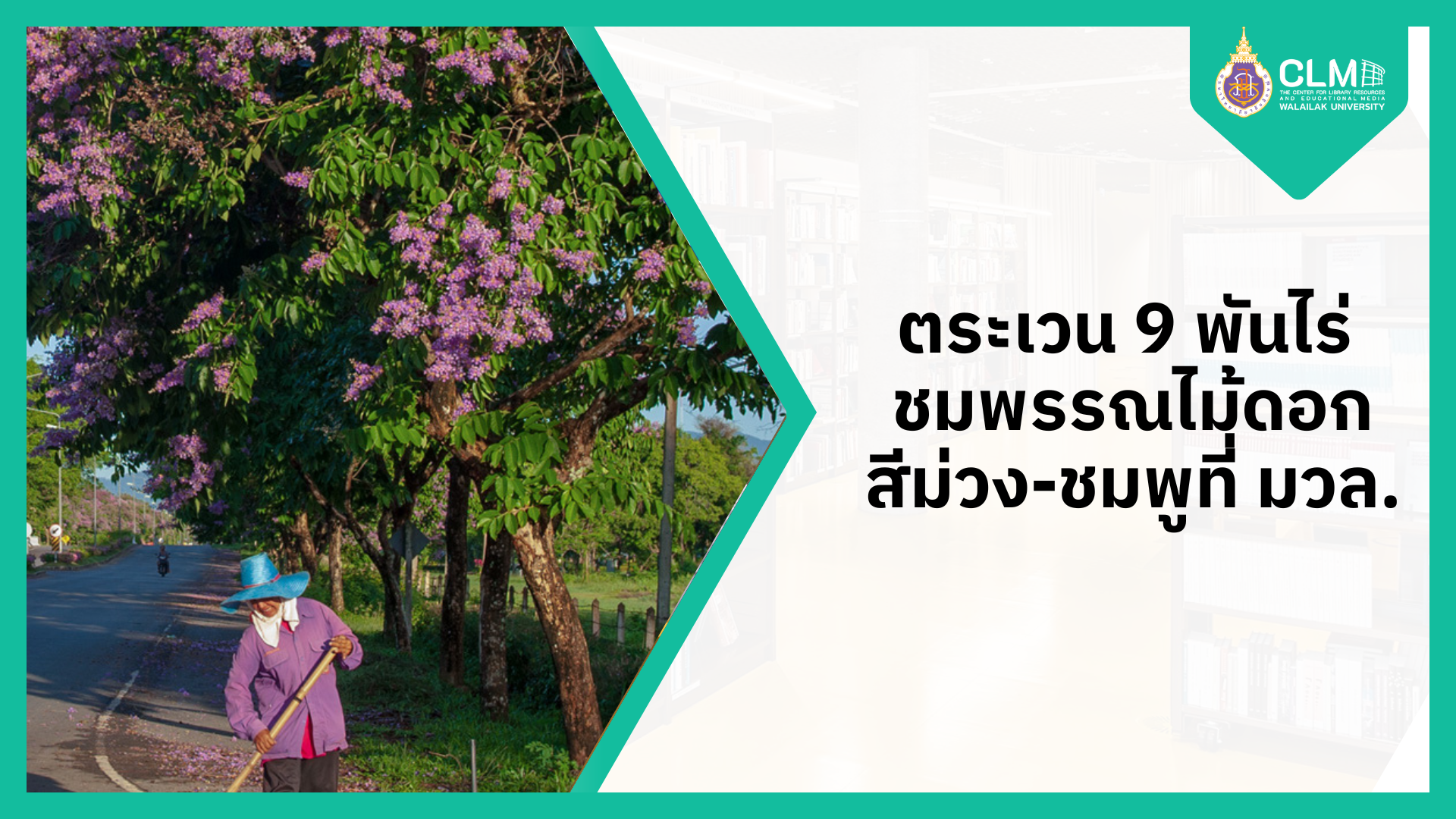
For Walailak University students, the Pradu tree is more than just a tree—it is a symbol closely associated with the university. Yet, there is another time of year when Walailak University becomes particularly spectacular.
During the summer break, approximately from March to May, the university campus transforms into a colorful floral wonderland, with beautiful purple and pink blossoms blooming across its vast area of more than 9,000 rai.
Meet the “Three Botanical Twins”
Along the roads around campus in March, visitors will notice tall trees covered with delicate light purple and white flowers. Ask different people what they are called, and you may get different answers: Selao, Tabaek, or Inthanin.
These three deciduous trees are often called the “Three Botanical Twins” because their flowers look remarkably similar, making them difficult to distinguish from one another.
But there is a simple trick to remember them:
“Selao has cracked bark, Tabaek has peeling bark, and Inthanin has smooth bark.”
Once you know this little trick, identifying these three beautiful trees becomes much easier! 🌳🔎
Roadside Highlights: “The Color of WU”
Along the main and secondary roads throughout the university, a variety of flowering trees bloom at different times, creating a beautiful palette of colors across the campus.
Pink Trumpet Tree (ชมพูพันธุ์ทิพย์)
These beautiful pink blossoms can be found especially around the Architecture and Design Building and along the main entrance road to the university. When in full bloom, they create a scene reminiscent of Thailand’s very own cherry blossoms.
Tabaek
Tabaek produces flowers ranging from light purple to white. Its smooth, hard bark and attractive canopy make it a popular choice for planting along roads, providing both shade and beauty.
Water Jasmine & Queen’s Flower (Inthanin Nam / Inthanin Bok)
These trees produce striking purple to pinkish-purple flowers, with distinctive wrinkled petals. During the hot season, they can burst into dense, spectacular blooms, adding vibrant color to the campus landscape.
Trees and Flowers Around Key Buildings
Beyond the roadside flowers, various buildings and campus areas feature ornamental and auspicious plants that contribute to the university’s identity and unique atmosphere.
1. Professor Dr. Vijit Srisa-an Building (Administration Building)
Pradu Tree:
The university’s symbolic tree, representing unity and harmony, is commonly planted around the Administration Building.
Orange Jasmine (Kaew):
Known for its fragrant white flowers, this plant adds a refreshing and peaceful atmosphere around the office area.
2. Academic Complex – Professor Dr. Sombat Thamrongthanyawong Building (ST)
Golden Shower Tree (Ratchaphruek / Khun):
Its brilliant yellow flowers create a striking contrast with the purple blossoms of Tabaek. These trees are often planted in open spaces between academic buildings, adding vibrant colors to the campus.
Desert Rose (Chuan Chom):
Often planted in pots and landscaped gardens around the academic buildings, this hardy plant thrives in strong sunlight and can produce flowers throughout the year.
3. Student Residence Area – Laksana Niwet
Yellow Trumpet Flower (Thong Urai):
With its bright yellow flowers, this easy-to-grow plant can bloom throughout the year and is commonly found along the dormitory fences.
Bougainvillea:
Available in vibrant shades of purple, pink, and orange, bougainvillea is often shaped into beautiful bushes around the residence buildings, bringing a lively atmosphere to the area.
Yellow Bells (Leuang Pradit Yathon):
These bright yellow flowers also bloom during the summer break, creating a beautiful contrast against the clear blue sky.
4. Botanical Garden and Surrounding Areas
Mimusops elengi (Phikun):
A traditional auspicious tree often found in common areas, providing shade as well as pleasantly fragrant flowers.
Lotus:
Found in ponds and water features around the university, lotus flowers provide beautiful scenery and are among the campus’s popular photo and check-in spots.
Come Discover “The Color of WU”
With more than 9,000 rai of campus landscape, Walailak University is more than an educational institution—it is also a vast green space filled with biodiversity and seasonal beauty.
So, when March arrives and the campus begins to bloom in shades of purple, pink, yellow, and white, take a little time to explore the roads, gardens, buildings, and hidden corners of Walailak University.
You might discover that your next favorite study spot is surrounded by flowers.